Truck stop terminals and synchronized jackpots: How routine stops yielded coordinated wins across regional slot networks for frequent travelers
Jonas Frank · Jul 23, 2026
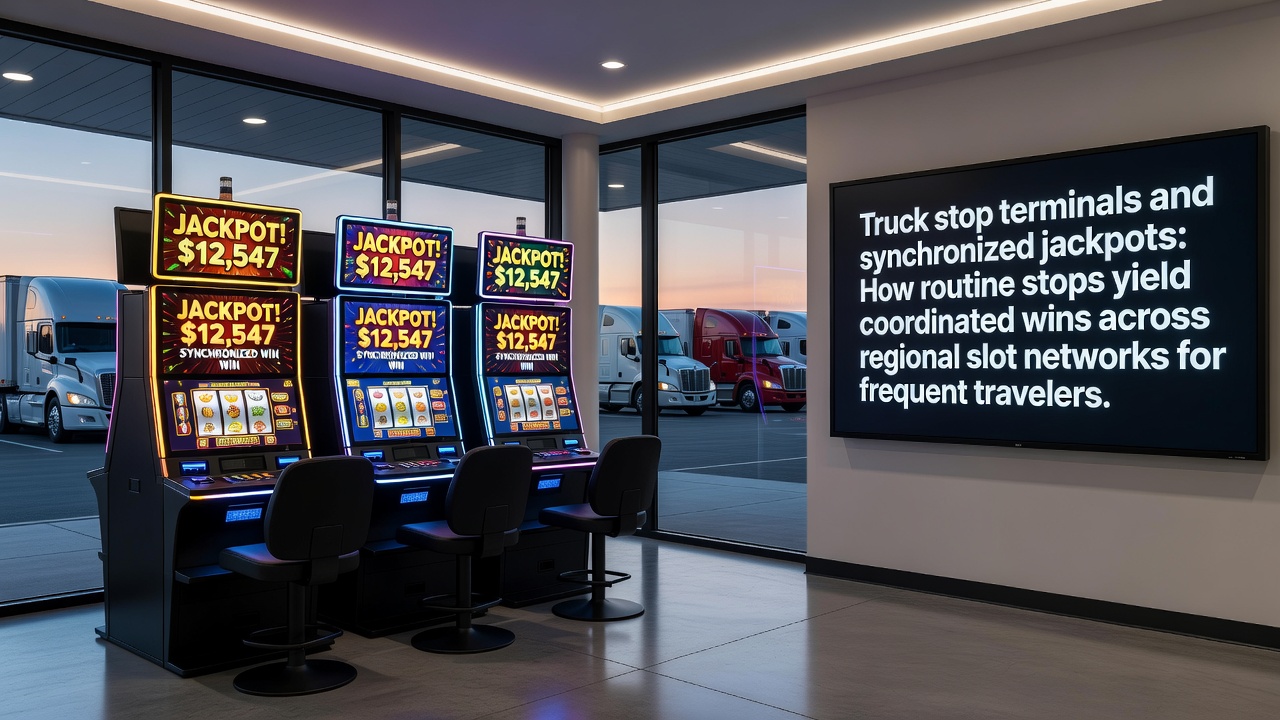
Truck stop terminals and synchronized jackpots: How routine stops yielded coordinated wins across regional slot networks for frequent travelers
Truck stop slot terminals operate as nodes in linked progressive systems that tie machines across multiple states into shared jackpot pools, and these connections create opportunities for coordinated payouts when frequent travelers hit specific machines during regular routes. Data from state gaming regulators shows that progressive networks in regions with heavy commercial trucking traffic link terminals at fuel stops, rest areas, and roadside facilities through centralized servers that pool wagers in real time.
Network Architecture and Jackpot Synchronization
Regional slot networks connect terminals using wide-area progressive technology where each wager contributes a fraction to one or more growing jackpots, and synchronization occurs when software protocols align contribution rates across participating locations. Operators in states such as Iowa and South Dakota have deployed these systems for decades, while newer installations in additional jurisdictions adopted similar frameworks by 2025. The technical setup requires continuous data exchange between venue servers and a central controller, which means that a jackpot triggered at one terminal instantly resets linked machines at distant stops.
Route Patterns Among Commercial Drivers
Commercial drivers who follow fixed corridors between distribution hubs and freight terminals encounter the same network machines on recurring schedules, and records from gaming operators indicate that several documented wins occurred along these established paths. One series of payouts in early 2026 involved drivers who stopped at facilities spaced roughly 200 miles apart, where sequential triggers aligned within a 48-hour window. Gaming data shows that such timing stems from the volume of play rather than any predetermined schedule, since each terminal contributes independently yet feeds the same pool.
Documented Coordinated Payout Events
State regulatory filings list multiple instances where single jackpot pools paid out at separate truck stop locations on the same day, and analysts attribute these clusters to the high frequency of play along major interstate routes. In one case from April 2026, three terminals in two states awarded linked prizes totaling over $1.2 million within six hours, according to reports submitted to the Iowa Racing and Gaming Commission. The events involved different drivers, each completing a standard delivery loop, which placed them at the winning machines during peak contribution periods.
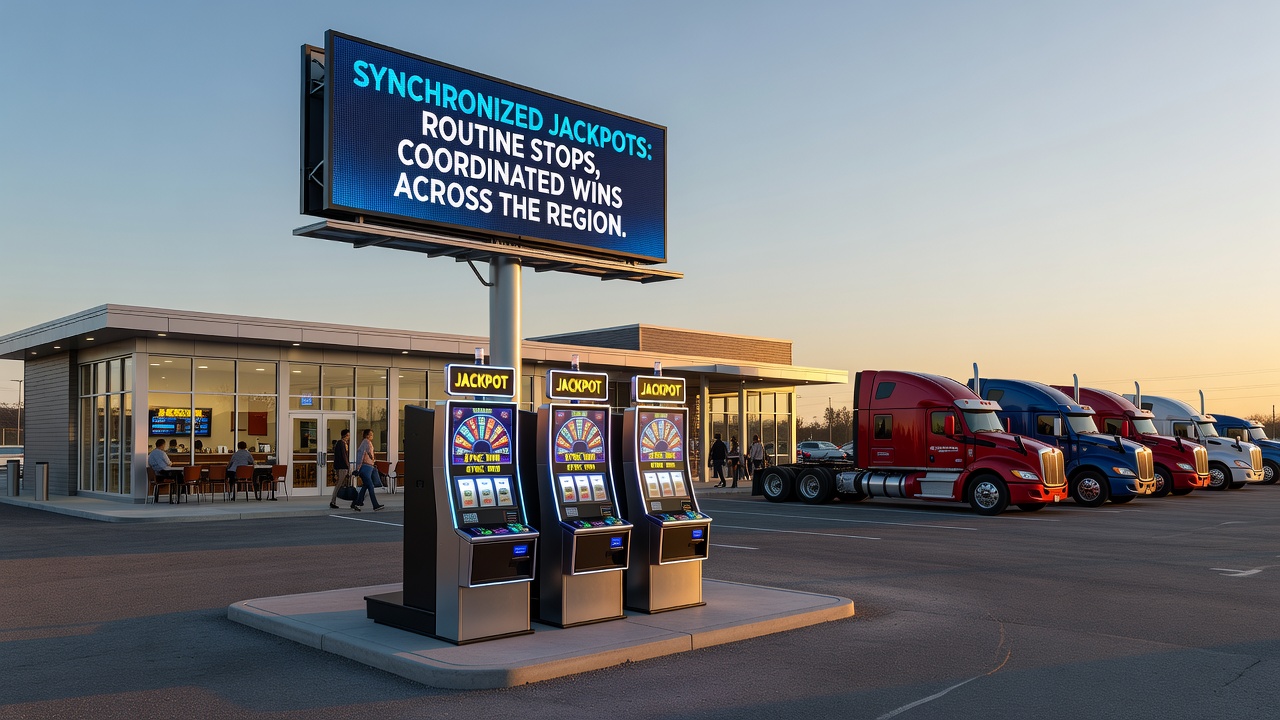
Further review of transaction logs reveals that coordinated wins often follow periods of elevated network activity, such as holiday travel surges or seasonal freight increases. Figures released by the Mississippi Gaming Commission for the second quarter of 2026 note a 9 percent rise in wide-area progressive contributions from roadside venues compared with the prior year, coinciding with expanded truck traffic on corridors connecting the Midwest to the Gulf Coast.
Technology Behind Multi-Site Triggers
Modern systems employ encrypted communication protocols and redundant servers to maintain jackpot integrity across hundreds of terminals, and industry reports indicate that latency issues have dropped below 50 milliseconds in most deployments. This speed allows a single winning spin to update the displayed amount at every connected site almost immediately. Manufacturers supply software updates that adjust contribution percentages based on regional play volume, which helps balance pool growth between high-traffic and lower-traffic stops.
Regulatory Oversight and Reporting Requirements
Gaming control boards require operators to maintain detailed logs of all progressive contributions and payouts, and these records undergo periodic audits to verify that linked machines operate within approved parameters. In July 2026, several jurisdictions introduced enhanced reporting standards that mandate real-time transmission of jackpot status to central regulators, a move intended to improve transparency for multi-site networks. Observers note that these measures align with broader efforts to monitor wide-area systems without restricting player access at approved locations.
Geographic Distribution of Linked Terminals
Truck stop networks concentrate in states that permit gaming at non-casino venues, and current maps show dense clusters along Interstate 80, Interstate 35, and Interstate 70. Participation extends into adjacent states through reciprocity agreements that allow shared progressive pools when operators meet each jurisdiction's technical standards. Data compiled by the American Gaming Association indicates that roadside terminals account for approximately 4 percent of total wide-area progressive play nationwide, yet they generate a disproportionate share of coordinated multi-site events because of consistent daily volume from commercial traffic.
Academic studies from university research centers have examined the statistical likelihood of clustered payouts, and findings published in 2025 confirm that route-based play patterns increase the probability of sequential triggers within defined time windows. These studies rely on anonymized transaction data rather than individual player identities, which preserves privacy while revealing aggregate trends.
Conclusion
Regional slot networks at truck stops continue to produce coordinated jackpot events tied to the movement patterns of frequent travelers, and regulatory data through July 2026 documents steady growth in both contributions and payouts. The combination of linked progressive technology and established commercial routes creates the conditions under which routine stops generate synchronized wins across multiple terminals. Ongoing oversight by state commissions and technical refinements by network operators maintain system integrity while supporting these outcomes.