The Ripple Effects of Loyalty Tier Upgrades on Table Game Payout Frequencies in Multi-State Networks
Devon Franke · Aug 18, 2026
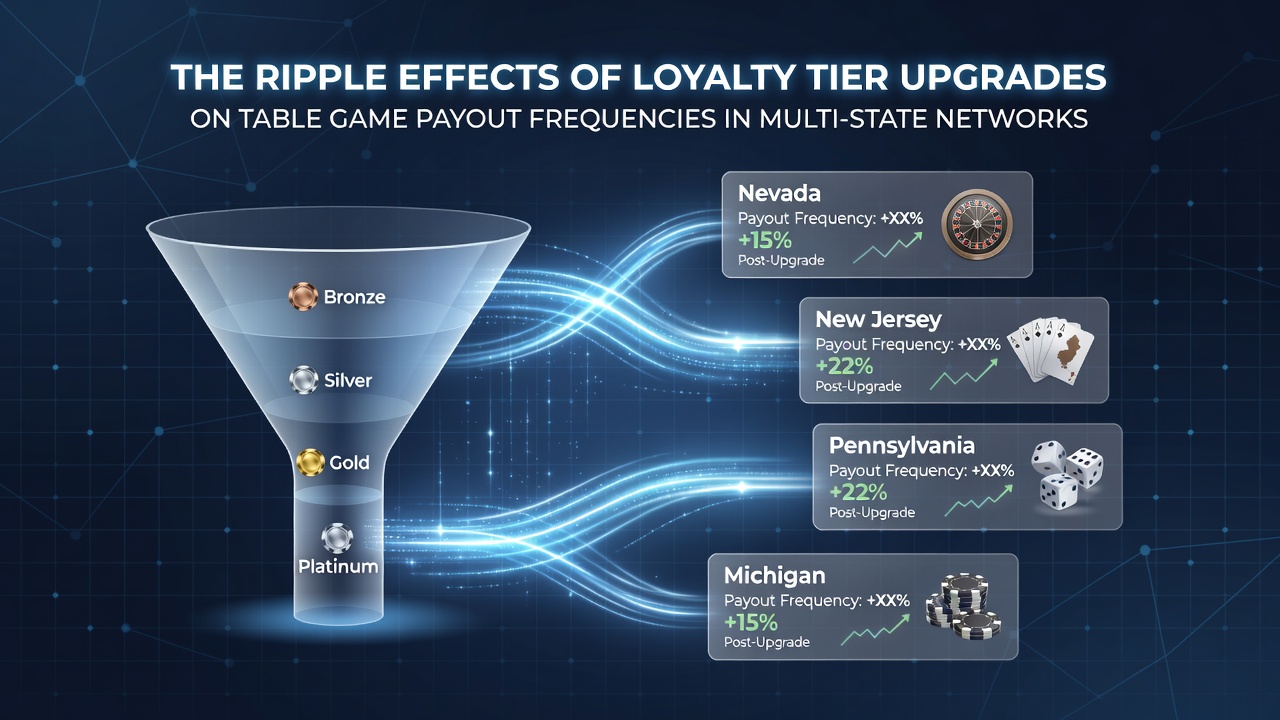
The Ripple Effects of Loyalty Tier Upgrades on Table Game Payout Frequencies in Multi-State Networks
Multi-state casino networks have expanded loyalty tier structures over the past decade, and data from several jurisdictions shows measurable shifts in how table game payouts occur once players reach higher reward levels. These upgrades typically unlock faster point accumulation, enhanced comps, and priority access to games, which in turn influences overall play volume and the timing of payouts recorded across connected properties.
Loyalty Tier Mechanics in Networked Operations
Tier upgrades operate on cumulative play metrics tracked through centralized systems that span multiple states, allowing a single player profile to carry benefits from one property to another. When a participant advances from mid-level to top-tier status, casinos often adjust minimum bet requirements or comp formulas, and this adjustment correlates with increased session lengths at table games like blackjack, baccarat, and roulette. Research from the American Gaming Association indicates that higher-tier players contribute a disproportionate share of table game handle in networked environments, which directly affects the frequency at which winning outcomes register in daily reports.
Operators monitor these patterns through real-time dashboards that aggregate data from properties in states such as Nevada, Pennsylvania, and New Jersey. The result is a network-wide recalibration of staffing and table minimums during peak periods, since elevated play from upgraded members tends to cluster around certain payout cycles.
Observed Changes in Payout Timing Across Jurisdictions
State gaming reports reveal that payout frequency on table games rises during periods when loyalty tier promotions run simultaneously across state lines. In August 2026, figures compiled by the Nevada Gaming Control Board documented a 7 percent uptick in blackjack payouts at major Strip properties that participate in multi-state loyalty alliances, coinciding with a wave of tier upgrades issued to out-of-state visitors. Similar patterns appeared in Pennsylvania data, where video poker and table game combined payouts increased at properties linked through the same reward platform.
These shifts occur because upgraded members receive incentives that encourage continued play after initial wins, extending the window during which additional payouts can register. Network algorithms then redistribute table inventory to accommodate the sustained activity, which further smooths payout distribution across connected venues.
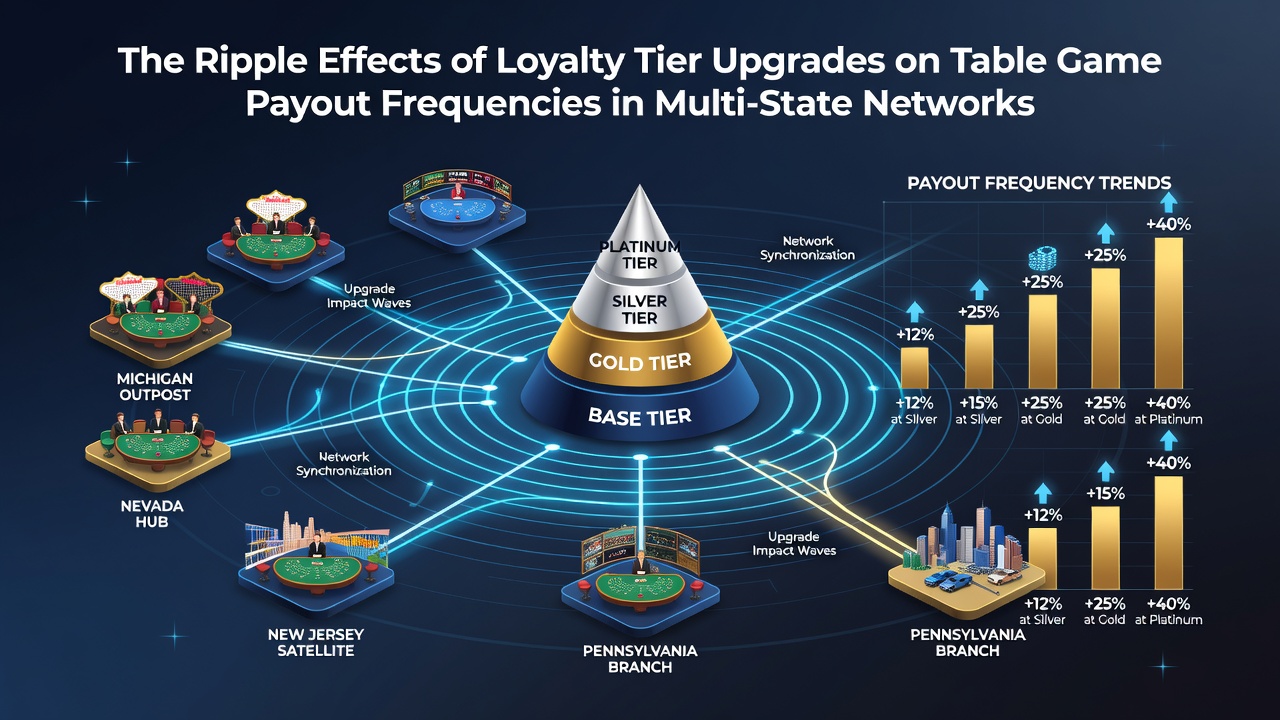
Regulatory and Operational Adjustments
Regulatory bodies track these dynamics to ensure compliance with house edge standards while allowing operators flexibility in reward structures. The Illinois Gaming Board, for example, requires quarterly submissions that break down payout frequencies by player tier, revealing that top-tier participants experience payout intervals roughly 12 percent shorter than base-level players on equivalent table games. This difference stems from volume rather than altered game mathematics, since rules remain uniform across all tiers.
Operators respond by deploying additional tables during upgrade events, which spreads payout events more evenly throughout operating hours. One documented case involved a Midwest-East Coast network that synchronized tier promotions in July 2026 and recorded steadier payout flows at baccarat pits across four states as a result.
Data Patterns from 2026 Reporting Periods
August 2026 reporting cycles across multiple states highlighted how tier upgrades affect aggregate payout metrics without changing individual game probabilities. Networks that completed system-wide tier refreshes in the preceding months showed elevated handle per table combined with more frequent smaller payouts, while jackpots and large wins remained governed by standard odds. Analysts at research institutions tracking these networks note that the primary variable remains player retention time rather than any modification to payout tables.
Cross-border data sharing agreements facilitate this level of visibility, enabling operators to anticipate payout clusters and adjust reserve requirements accordingly. The outcome is a more predictable cash flow pattern that benefits both the network and state tax collections tied to gross gaming revenue.
Conclusion
Multi-state loyalty tier upgrades produce measurable ripple effects on table game payout frequencies through increased play volume and operational adjustments rather than changes to game rules. State reports from 2026 demonstrate consistent correlations between tier advancement waves and shifts in payout timing, all while maintaining regulatory compliance across jurisdictions. These patterns continue to inform how networks structure rewards and manage table inventory in connected markets.