Golden Entertainment Nabs Unanimous Nod from Nevada Gaming Control Board to Go Private
Petra Weber · Apr 14, 2026

Golden Entertainment Nabs Unanimous Nod from Nevada Gaming Control Board to Go Private
The Approval That Sets the Stage
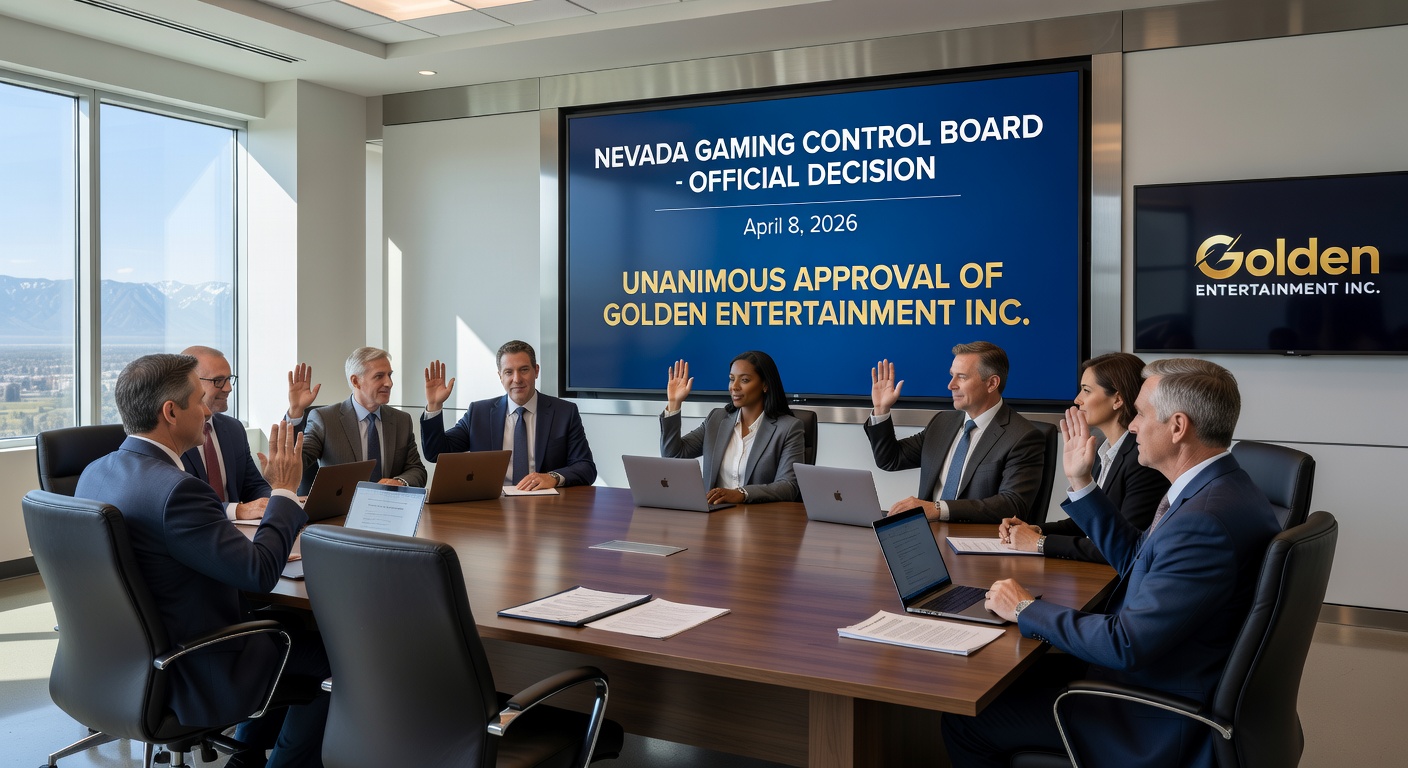
On April 8, 2026, the Nevada Gaming Control Board delivered a unanimous green light to Golden Entertainment Inc.'s bold application, clearing the path for the Las Vegas operator to deregister as a public company and transition fully private; this pivotal move, detailed in the board's agenda disposition, paves the way for the sale of its operating assets to CEO Blake Sartini and his affiliates while shuttling its real estate portfolio to VICI Properties through a sale-leaseback arrangement pegged at $30 per share. Observers note how such approvals mark critical junctures in the gaming industry's evolution, especially for regional players like Golden Entertainment, whose portfolio includes high-profile spots such as The Strat Hotel Casino, Arizona Charlie's venues, and a network of PT's taverns scattered across Nevada.
What's interesting here is the seamless alignment between regulatory oversight and corporate strategy; the board's five members voted without dissent, signaling strong confidence in the transaction's structure and the parties involved, although final sign-off still rests with the Nevada Gaming Commission set for April 23, 2026, in Carson City. Data from the board's disposition confirms the application's completeness, covering all necessary disclosures on ownership shifts, financial terms, and compliance measures that gaming regulators scrutinize closely.
And while the deal's valuation lands squarely at $30 per share—a figure that reflects negotiations blending market conditions with strategic premiums—those who've tracked Golden's trajectory point out how this price point emerges from detailed valuations of its asset base, encompassing both operational muscle and prime real estate holdings in competitive markets like Las Vegas and beyond.
Golden Entertainment's Footprint in Nevada Gaming
Golden Entertainment stands as a key player in Nevada's diverse casino landscape, operating The Strat Hotel Casino—a towering icon on the Las Vegas Strip known for its observation deck and thrill rides—alongside the neighborhood charm of Arizona Charlie's in both Las Vegas and Reno, plus over a dozen PT's branded taverns that dot the Silver State with their tavern-style gaming and casual vibes. Experts have observed how this mix caters to locals and tourists alike, blending big-resort energy with everyday accessibility; take The Strat, for instance, where visitors flock not just for slots and tables but for the SkyJump experience that drops thrill-seekers 829 feet down its facade, or PT's spots where regulars nurse drinks amid video poker machines tucked into community hubs.
Under CEO Blake Sartini, who's steered the company since its public days, Golden has navigated ups and downs in the post-pandemic gaming rebound, focusing on operational efficiencies and asset optimization; now, with this deregistration push, the firm aims to shed the quarterly reporting grind that public companies endure, allowing sharper long-term bets without shareholder scrutiny breathing down its neck every earnings cycle. Figures reveal Golden's steady presence: its taverns alone generate reliable tavern gaming revenue, a niche where Nevada leads nationally, while Arizona Charlie's pulls in locals seeking value-driven play away from Strip excesses.
But here's the thing—the real estate side underscores a classic gaming maneuver; VICI Properties, a real estate investment trust specializing in casino properties, steps in to acquire Golden's land and buildings, then leases them back to the operators under long-term agreements that stabilize cash flows while unlocking capital for growth or debt reduction. Such sale-leasebacks have become standard in the sector, with VICI's portfolio already boasting heavyweights like Caesars Palace and MGM Grand, making Golden's assets a natural fit in its expansion playbook.
Breaking Down the Transaction's Nuts and Bolts
At its core, the deal slices Golden's empire into operational and property components; Blake Sartini and his affiliates scoop up the operating assets—the licenses, customer databases, equipment, and day-to-day machinery that keep slots spinning and tables buzzing—for a value tied to that $30 per share benchmark, while VICI takes the bricks-and-mortar, ensuring continuity through lease terms that let Sartini's team run the show without owning the underlying dirt. This structure, greenlit unanimously by the Gaming Control Board, hinges on Sartini's proven track record; as CEO, he's overseen expansions like PT's tavern network growth, turning modest venues into revenue engines through savvy location picks and player loyalty programs.
Turns out, the $30 per share price draws from independent appraisals and market comps, capturing not just current earnings but future potential in a gaming market where Nevada raked in over $15 billion in 2025 gaming revenue alone, per state reports; for Golden, whose shares traded variably pre-announcement, this premium offers shareholders a clean exit while positioning the private entity for nimble decisions, like tech upgrades or market pivots, unencumbered by SEC filings. People who've studied similar go-private deals in gaming—think Boyd Gaming's past maneuvers or regional peers—often discover how these shifts sharpen focus, cutting administrative fat to fatten operational edges.
One case that echoes this involved another Las Vegas operator deregistering years back, emerging leaner and more aggressive in local markets; Golden's path mirrors that, with its assets primed for post-deal tweaks, whether refreshing The Strat's entertainment lineup or expanding PT's footprint where neighborhood gaming thrives on convenience over glamour.
Navigating the Regulatory Gauntlet
The Gaming Control Board's April 8 vote represents the first major hurdle cleared, but all eyes now turn to the Nevada Gaming Commission, whose April 23 meeting in Carson City holds the ultimate authority; commissioners there will probe deeper into suitability findings for Sartini and affiliates, financial safeguards, and public interest angles, drawing on the board's recommendation as a strong endorsement. According to Review-Journal coverage, this step aligns with Nevada's rigorous process, where unanimity at the board level often foreshadows commission approval, especially for transactions preserving gaming integrity and economic contributions.
It's noteworthy that Golden's application sailed through without hitches, bolstered by clean compliance histories across its properties; regulators verify everything from money laundering protocols at PT's to responsible gaming at Arizona Charlie's, ensuring the private structure won't dilute oversight. And since Nevada law mandates such dual approvals for major ownership changes, the timeline—from board nod to commission date—reflects efficient processing, keeping momentum alive in a deal valued in the hundreds of millions when factoring share count and asset scopes.
Those who've watched these proceedings know the commission often fast-tracks vetted deals, particularly when they involve experienced insiders like Sartini, whose affiliates bring familiarity with Nevada's gaming code; yet, expect questions on lease terms with VICI, capital redeployment plans, and how privatization bolsters rather than burdens local jobs, which Golden supports across hundreds of positions from dealers to tavern staff.
Why Privatization Resonates in Gaming Circles
For Golden Entertainment, ditching public status means laser focus on core strengths—running casinos and taverns where margins matter most—without the distractions of analyst calls or proxy fights that plague listed peers; studies of privatized gaming firms show improved agility, with quicker adaptations to trends like sports betting integration or contactless wagering that exploded post-2020. The reality is, public pressures often force short-term plays, whereas private control lets teams like Sartini's chase decade-long visions, such as elevating The Strat beyond its budget-resort rep through targeted investments unlocked by this capital infusion.
Take PT's taverns, for example: these neighborhood staples thrive on steady play from locals who value quick hits over high-roller spectacle; privatization could accelerate tech rollouts, like app-based loyalty tracking, mirroring how other private operators outpace publics in player retention metrics. VICI's involvement adds stability too, as its leases—typically 15-40 years with escalators—provide predictable occupancy costs, freeing ops cash for reinvestment while REIT investors gain another trophy property yielding solid dividends.
What's significant is how this fits broader patterns; Nevada's gaming sector has seen a wave of such restructurings, with sale-leasebacks totaling billions since VICI's 2017 spin-off, data indicates, as operators trade equity for liquidity in a capital-intensive field where real estate hogs balance sheets.
Conclusion
As Golden Entertainment hurtles toward its April 23 date with the Nevada Gaming Commission, the unanimous Gaming Control Board approval solidifies a transformative pivot, blending asset sales to CEO Blake Sartini with a VICI Properties real estate handover at $30 per share, all aimed at fostering sustained growth minus public company rigors. Observers anticipate smooth sailing given the board's backing and Golden's solid footing with icons like The Strat, Arizona Charlie's, and PT's taverns anchoring its legacy; should commissioners align, the deal closes a chapter on public trading while opening doors to private prowess in Nevada's ever-competitive gaming arena, where focus wins the long game.